In Their Green Dreaming

Yesterday felt like the first day of spring, and at church the old ladies laughed and said the groundhog saw no shadow. I wonder which groundhog they were listening to, because my mama always says the Northern groundhog is a liar and a devil and that only the Georgia groundhog, who is a true Southern gent, can be trusted. 

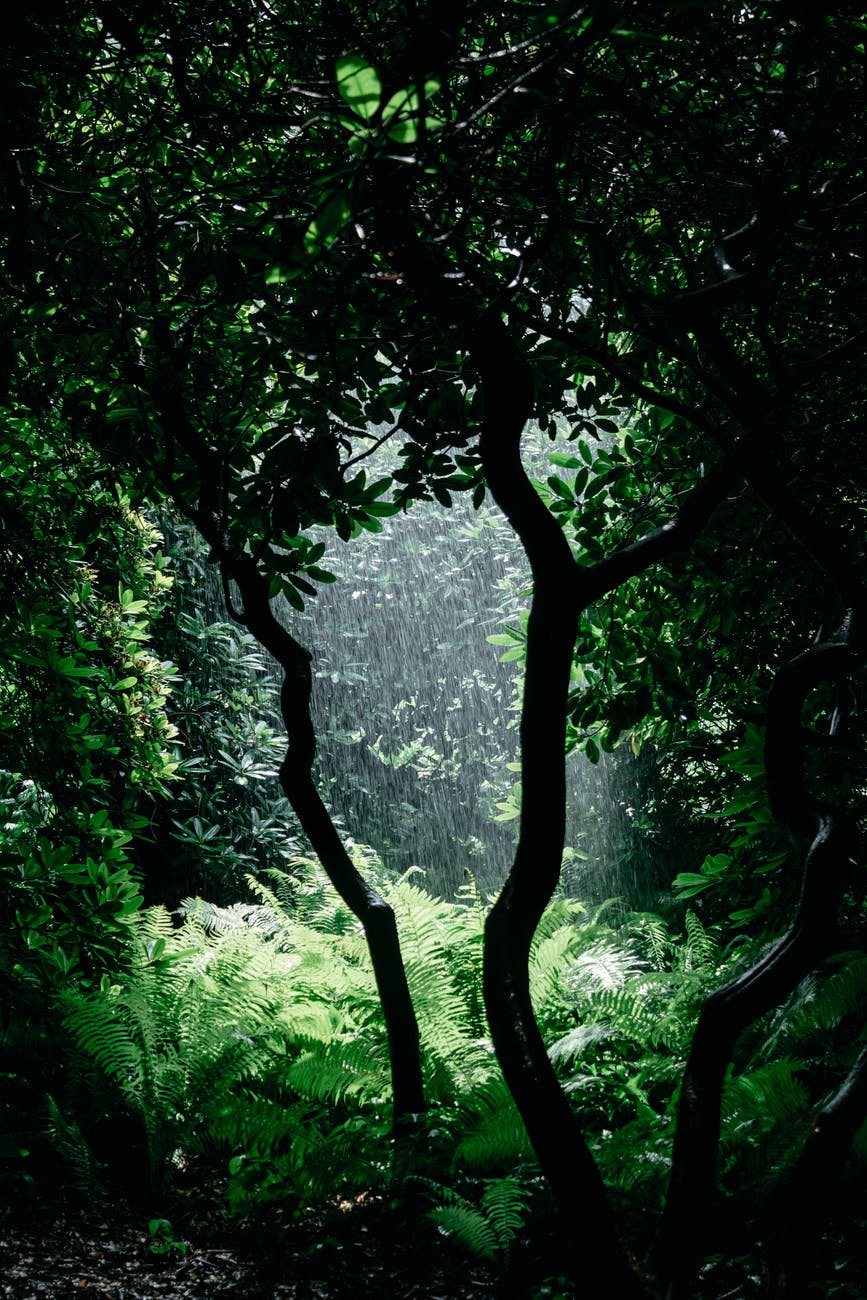
Regardless of what any groundhog thought, the sun beamed on the trees with smug benevolence, and their rustlings had the seeming of giants stirring from a long sleep. I went for a long walk through the woods and listened to the talking of the wind. I walked without shoes, because I wanted to feel the ground: the crunching of dead leaves, the softness of moss and new clover, the prickly heat of sun-warmed pine needles, and the unexpected shock of cold water welling up around my toes wherever the ground held onto some lingering moisture. Even where the dryer earth surrendered to the warmth of a waking Spring, the mud was still clinging to winter’s chill. 

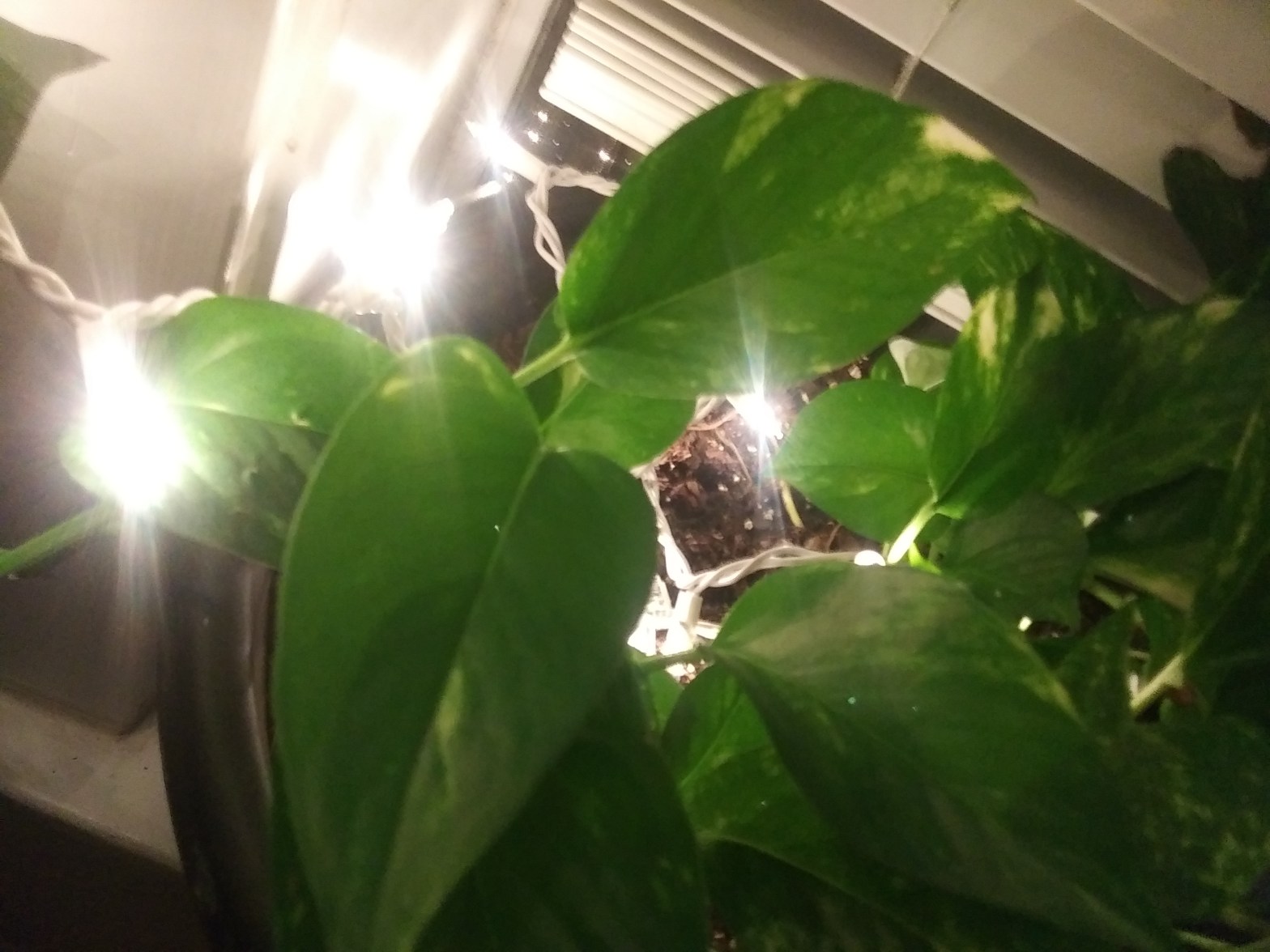
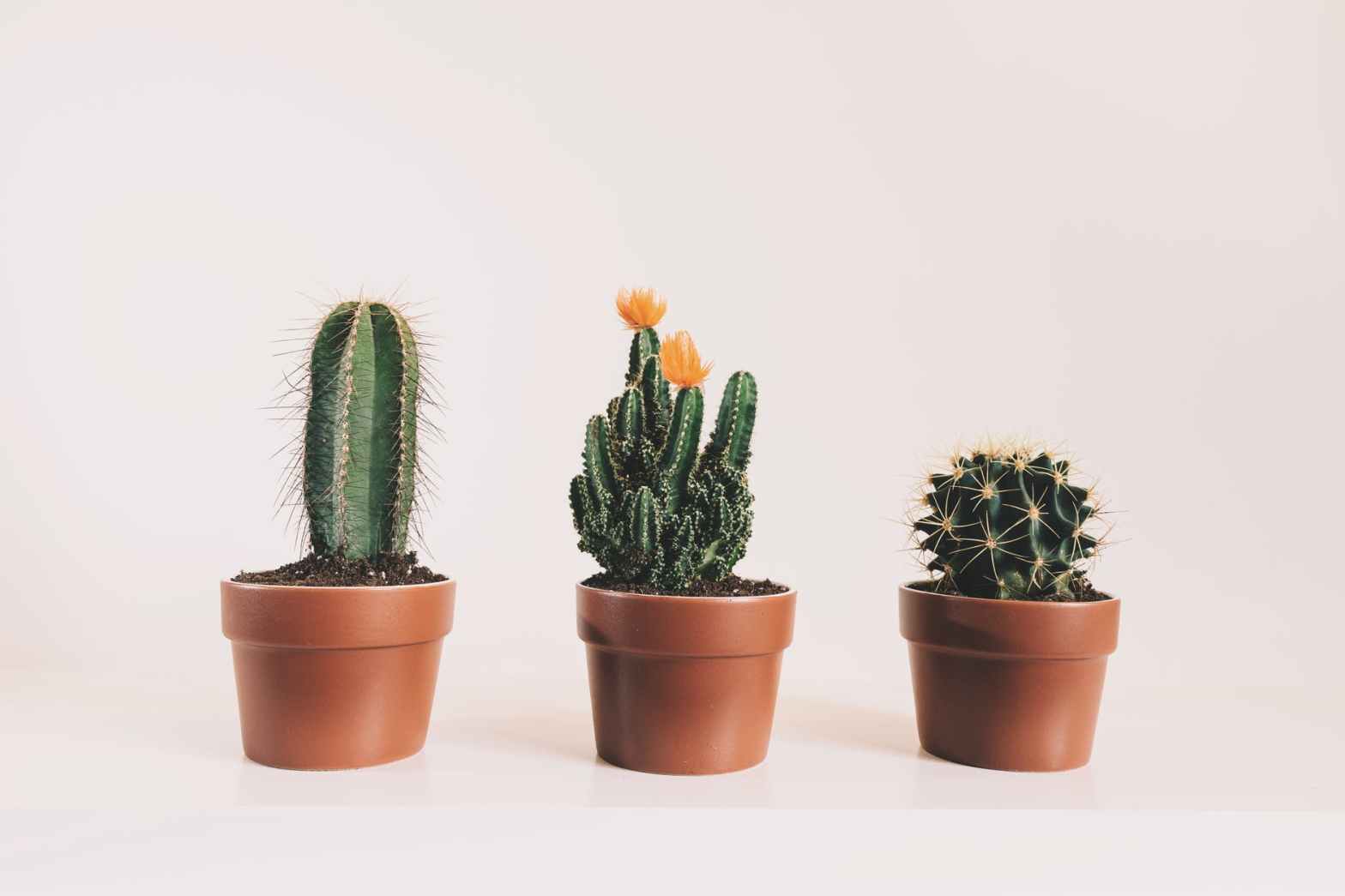
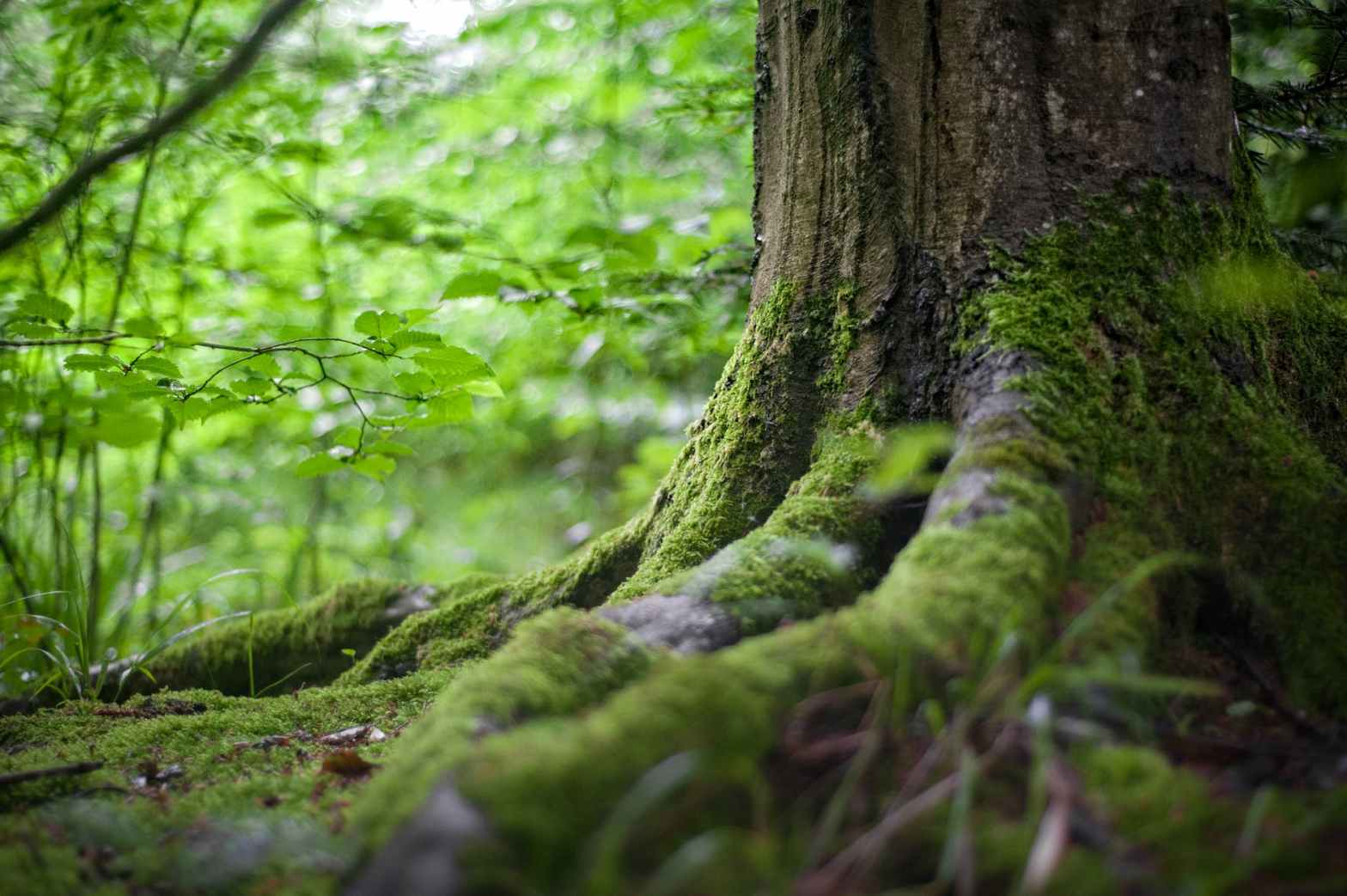
On my way back I passed through a place on the trail where the earth was like a raised wall on either side, held together by tangled roots as thick as my  forearm. These walls and roots were covered by a thick blanket of moss, a soothing cover of sleepy green that hummed peace into the air. On an impulse, I plunged my fingers underneath it, working them into the soil and then rocking my hand back and forth gently, until I lifted a piece of it with roots unbroken that spilled over my palm. This I carried back to my dorm with the reverence I would carry a child, and placed it in the pot with Buddy (the III), my pothos plant. I do not think he will stay there long; I aim to move my moss patch in with my pot of succulents eventually, which already houses Finnigan, Frederick, and Mufasa. Those are at my house though, not the dorm. 

I think that he will be happy with the succulents. I must remember that moss loves to be watered often, at least twice a week; I must remember how he loves to feel the sun. I think that plants are good for our minds. We take care of them, but they also take care of us. It is easier to remember these things for them than for ourselves, but maybe in the course of watering our friends we may remember to take a drink ourselves. Maybe as we place them in the sun, we may stop a moment ourselves to feel its warmth. And I know that I myself, when I admire their beauty and see none in myself, remember sometimes that the same Creator who saw these and called them good, saw us and said the same. 

I will call this moss patch Fred. The aloe is already named Fred and the hen-and-chick is Frederick, but I will not be confused because they have such different personalities. I will never confuse Fred the Moss, so gentle and so quiet, with the flamboyance and the loud, bursting joy of Frederick. And Fred the Aloe is very much only himself, steadfast and world-weary, enduring all things and continuing in spite of harsh circumstance to fulfill who knows what great purpose. (He has tenaciously survived two seperate and vicious attacks of a fat ferocious feline, a freeze, and several accidental over waterings besides. I do not know what mission he clings to life for, only that it must be of great importance.)

So I will call this moss Fred. I do not think my friends will mind. Human syllables must mean so little to them–who knows what chlorophyllic ciphers they give to one another in their silent singing? I hope he likes it here in this window. In a way I am sorry for having stolen him from all that he has known, the forest and the snaking roots: and yet I feel I need him more than did those sleeping leaves. I hope he understands. In any case, I will take good care of Fred. He will not want for water, light, or love, and all I will ask of him is living. I will love him because he knows how to live, because he knows nothing else: to him there is only the great circling, out of the earth and eventually back into it again, and none of this anything less than a proclamation of the glory of the Designer. I admire Fred and the others so much, they who never falter in fulfilling the purpose of their existence,who never hesitate, question or regret. Sorrow holds no meaning to them in their green dreaming.

“Island of the Blue Dolphins” Review

The Island of the Blue Dolphins” had a very specific aesthetic to it that I was trying to pinpoint throughout the book as I read it for the first time. It was permeated with a lonely beauty and quiet purpose that had a nagging familiarity to it. About halfway through, I realized it: this book reminds me of Minecraft.  

    The story follows that of a native woman named Karana on her home island. She lives to see most of her people slaughtered by white hunters who use the island for their own gain and try to cheat the people living there. After this, the remainder of her people are taken away by another group of white men who are seen as deliverers, but when her younger brother is left ashore Karana jumps overboard to stay with him. After her brother is killed by wild dogs however, the remainder of the book details her survival over the next eighteen years as she slowly learns to forgive the dogs and befriends much of the wildlife she shares the island with. 

    The book is written in lyrical prose that conveys both the beauty of the island and the loneliness the narrator experiences. I believe this is what called  my mind to the popular block building game in which your avatar wanders, largely alone, through a vast and often deserted expanse of land completing various survival related tasks while soft piano music manages to elicit the same feeling of abandonment and appreciation of nature that the Karana’s inner thoughts invoke in the reader. The lack of dialogue forces the reader to become entangled in these thoughts, slipping into Karana’s head and seeing the world through her eyes. I think it is this quality, and the uniqueness of her voice and perspective, that makes the book such an interesting read. 

    I think this would be an excellent text to teach in ninth or tenth grade, even though the lexile level is 1000, making it an accessible text to students in grades as low as six or seven. The themes of this book could be easily expounded upon to provoke deep thought on subjects such as colonialism, ecology and preservation, identity and humanity. I would love to see a unit crafted to compare texts such as this, where a single human being is stranded on an island and manages to preserve human dignity in the face of adversity, and a text like “The Lord of the Flies,” where a group of individuals in the same circumstances tend towards the loss of humanity. It could lead to some very interesting projects and essays regarding the role of society and how it can either advance or erase the ideals of  humanity. 

DISCLAIMER:  Warning…sadness rating 20/10. VERY sad. 

“The Outsiders” Review…PART TWO

Think I plan on continuing the book review, maybe come back with new insights or ideas on that 100 or so pages of social commentary on the destructiveness of division and classism in America? Sike.

This post is reviewing the song “The Outsiders” by Needtobreathe, a Christian rock band.

While the song has literally no connection to the book (I checked, just so as not to make a fool of myself), it does deal with a similar theme–the divisions between people. The song opens with a line about the petty things human beings fall out over: “Short falls and little sins/close calls where no one wins.” One line that’s repeated throughout the song that underlines the theme of conflict between people or groups is “Why are we keeping score?” In the chorus of the song the singer identifies himself as part of an ostracized group, but in a way that claims that position in a more positive light–“We’ve finally come to terms/We are the Outsiders.”

The song has an upbeat tempo and an inspirational message to listeners who have ever felt cut off from the world around them or as if they were fighting a losing battle with the culture of today. Personally, I feel as though this song is an anthem both for the band itself and for Christians, whom I believe the song calls to stand in unity rather than be divided amongst ourselves, ‘keeping scores.’ At the same time, we are to set ouselves apart, as is reflected in the last two lines: “On the outside…we’ve found a home/On the outside..we chose to be.” Of course, interpretation depends on the listener so you can argue with me in the comments and I will politely ignore you, just like I ignore sources that don’t agree with me when I’m writing essays.

I highly reccommend this song, and the album it’s a title track for (Stones Under Rushing Water and Something Beautiful are particularly good tracks.) This band has an interesting sound and uses some less conventional instruments such as the mandolin. They also generally have deeper meanings to their songs, lyrics that you can really pick apart and analyze if you so fancy, something that makes my English Major heart happy. Music without poetry is detrimental to the heart…stop screaming if you have nothing to say…(@ you modern country music, surely there is a more vital and moving part of the human experience to immortalize than your devotion to your dog, truck, and beer.)

Goodbye friends I must water my plants and eat dinner before class.

“The Outsiders” Review

This week my class read the book “The Outsiders” by S.E. Hinton. A classic, this text is often required in high school classes (and often passed over for watching the movie and reading the sparknotes instead, as per the usual when we are young and believe wholeheartedly in our ability to get away with anything.)

The novel follows the exploits and inner machinations of Ponyboy, whose reflections on class structure and cyclical poverty are highlighted by the incidents of gang violence that have become his norm. When his friend kills a rival gang member to defend their lives, the two adolescents find themselves on the run. By the end of the novel they have engaged in an unexpected act of heroism, but it does little to change public opinion of the impoverished masses. Ponyboy decides to write his story, in hopes that it will make a difference.

This novel has a lot of merit (obviously, it’s a classic) For one it deals with important themes and social issues. It has an emotional impact on its readers that has stood the test of time. However, most of the symbolism in the book is very surface level, and it has a lexile level of only 750L, placing it on a level easily understandable by fourth graders. In a high school classroom setting, I would not use this as a unit text unless a great deal of supplementary material was brought in to make it more challenging.

As a supplemental/AR text however, I would reccommend it to teachers in any grade 5-12 because it tends to be a fast and insightful read that can coax even relunctant readers to engage in and enjoy the process of reading and even critical thinking, as they recognize how elements of the text relate to their own experiences or to the world around them.

Greetings and Salutations

Here is a secret: I do not write unless there is a gun to my head.

I love to write. I’ve even been told I’m good at it. And yet, I don’t do it unless there are impending due dates. There was a time when I wasn’t good at it, when I wrote for the joy of it and because I felt like I had something to say that people wanted to hear. Three and a half years of college and at least a dozen papers later, I’ve become an accomplished but relunctant writer. I no longer really believe I have anything compelling to say, and it’s no longer something I see myself pursuing after graduation in May.

This blog is going up because it’s required for a class–we were told to create a blog and review the YA novels we read for class. There are neat scratches of black pen marking out dates on my calendar to ensure that I write them, bloodless required drabbles though they may be.

I am hoping, however, (because it is the month for doomed resolutions, because the birds rushed over a white sky cleaned by the rain as I watched this morning, because it is a new decade, and because I am drinking raspberry tea which makes me think that I can believe in myself) I am hoping that I will write more than what I have to just to fulfill those little boxes. Maybe I will review songs, poems, movies, and the color of the trees here in rural Mississippi as Spring seeps into the ground with the rain. Maybe I will post about the intricate and beautiful lives of my 23 houseplants (recently 24….RIP Finnigan).

Then again, maybe I will not.

I would like to love writing again. But to love something can be exhausting and for awhile I have felt starved for light. So we shall see. Maybe I will write; maybe I won’t. I am tired but trying so please don’t expect things of me. Maybe I’ll disappear into the woods for a year because if I’ve learned anything over my educational career it is that the trascendentalists had a real good point. Love those dudes.

Read or don’t, I trust that you shall be wise stewards of your time and accurate judges of what is worth ten minutes of it.

Sincerely,

AnEmotionalHouseplant

Why The Title

I titled this blog “Diary of an Emotional Houseplant” fully knowing that I was setting it up to write reviews of YA novels. Why did I do that?

Well, besides being an agent for chaos and hoping to confuse everyone since I myself am eternally confused by life, there are two main reasons.

First of all I hope to write about some things other than just books, and one of the main topics that interests me is, in fact, the rich and complex lives of houseplants. In particular I mean my own houseplants: Gemma, Kay, Jess, Mark, Sean, Lydia, Allison, KimiDean, Grace, Kelsey, Fred, Benedict Cumberbatch, Buddy the Third, Felicia, Flo, Nate, and a few others who are actually trees recently graduated to the outdoors: George Washington, Nathaniel Hawthorn, Sergeant Crabapple, Larry (whose brothers Curly and Mo did not make it) The Father, The Son, and The Holy Ghost (those last three are dogwood trees).

Contrary to popular belief these plants lead exciting and enriching lives, filled with travel (from dorm to home), personal struggles (bugs, overwatering, underwatering, an overweight cat that likes to chew their leaves), beauty (they are beautiful) and happiness (they make me happy).

Second of all, I think “Emotional Houseplant” is an accurate representation of my character. I once saw a post on instagram that said something about self care and remembering to drink water because we are all just houseplants with complex emotions. I took that and said to a friend, “I’m just an emotional houseplant and the deepest desire of my heart is to be gently watered and then left alone somewhere in the sun.” She told me to start a twitter and post nothing but random statements like that. I did not. But here’s this blog, and there’s the name.

Signed,

An Emotional Houseplant

Design a site like this with WordPress.com
Get started